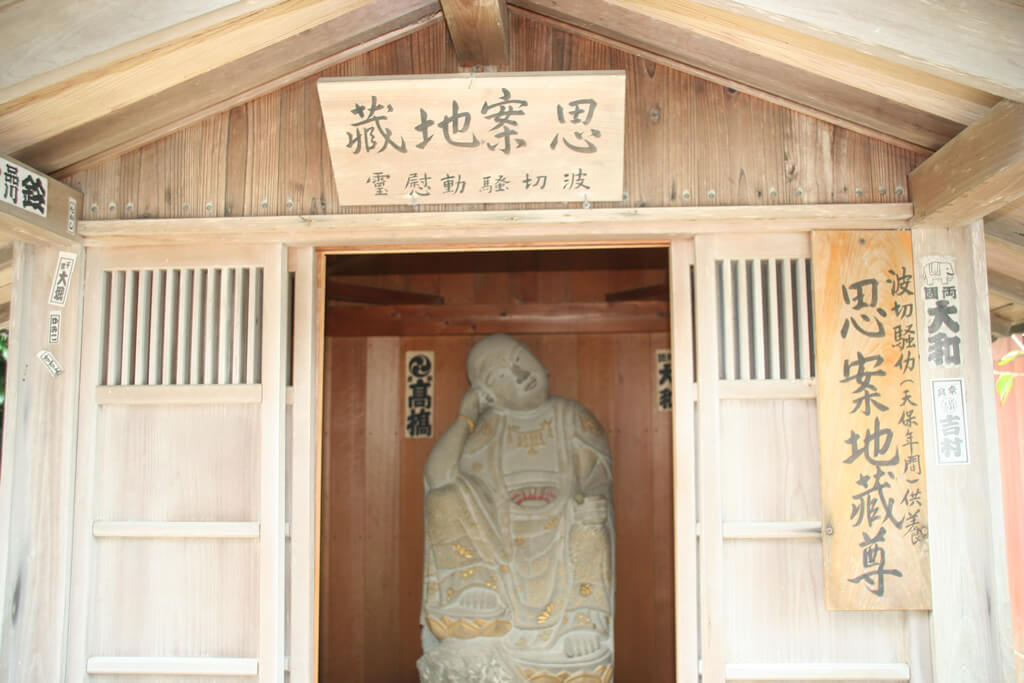
Once upon a time, there lived a fisherman named Sozaemon at the mouth of the beach of Nakiriura, Daiozaki. One day, Sozaemon went out to the coast of Daiojima and cast a net as usual, but on that day he did not catch a single fish, so he wondered what had happened. A stone 1 meter long was caught in the net.
“What is this?”
Sozaemon threw the stone into the sea and rowed the boat out to sea, throwing in a net when his intentions were revealed to him.
“A stone again?”
Sozaemon threw the stone away, muttering to himself, and rowed on in a different direction, and when he cast his net, the same stone caught again.
Sozaemon thought it strange that the same stone appeared not once, but twice or thrice, so he loaded the stone onto a boat, rowed back, and placed it under the earthen embankment on the beach.
Several months passed, and when the village children went out to play on the beach and urinated on the stone, the child developed a fever, and the child who kicked it began to get swelling in his feet.
"This is strange, it's Tatari stone..."
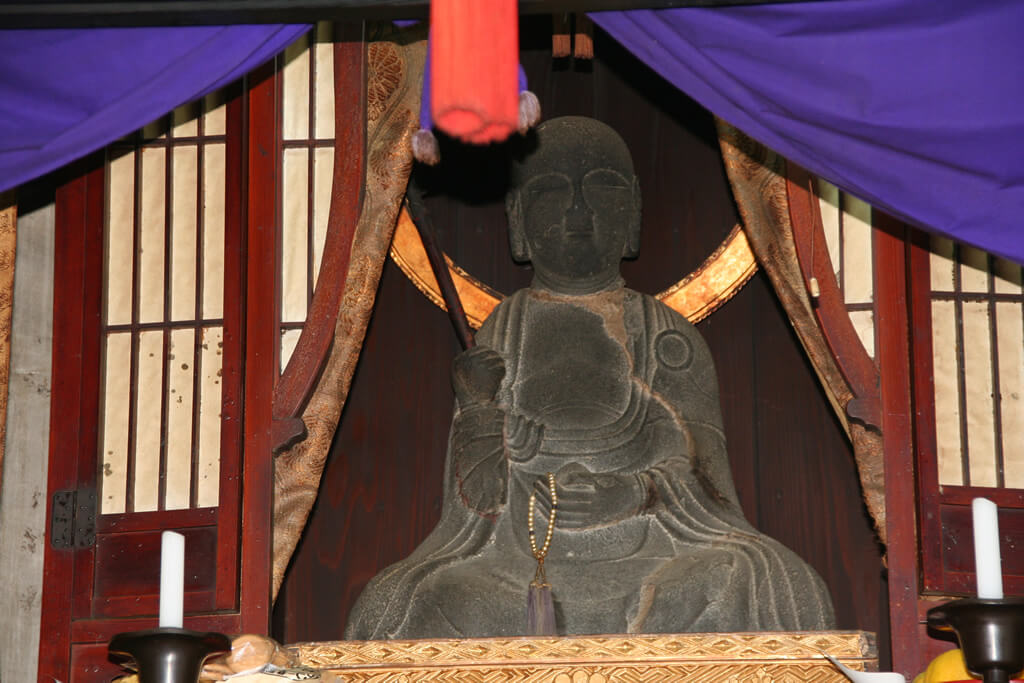
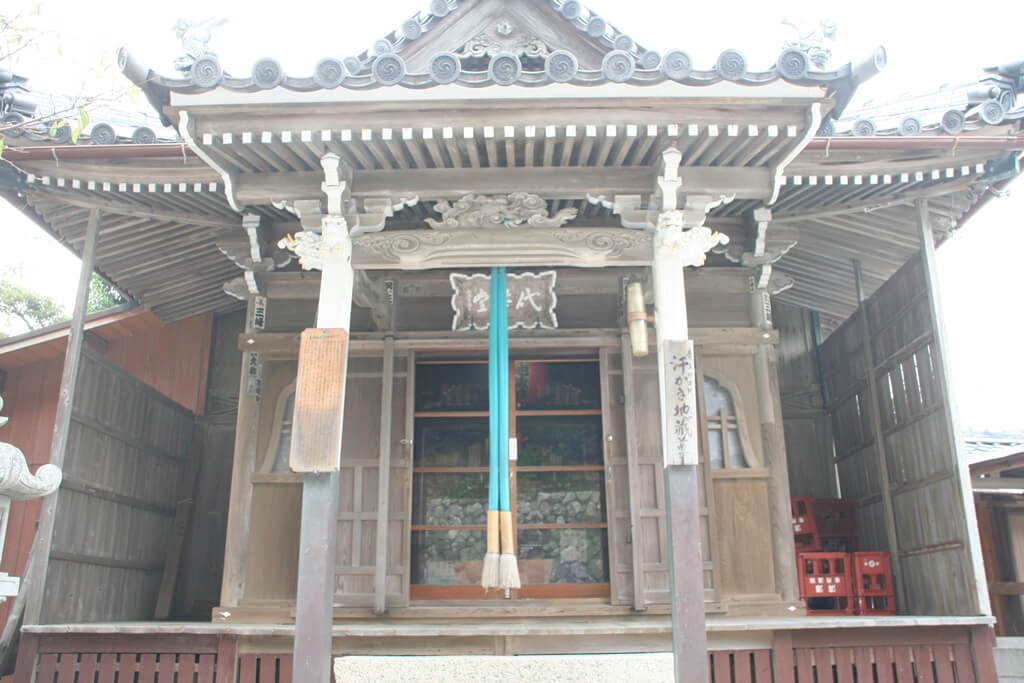
As they were saying this, the shells and seaweed that had stuck to it were removed by the rain and wind, and the shape of the stone Jizo was revealed. They decided to build and enshrine Hokora on the mountain of the hall on a small hill.
However, when the village had a big catch or a good harvest, this Jizo would sweat white, and on the other hand, when there was an earthquake or tsunami, or a poor catch, bad waves, or a bad harvest, the Jizo would sweat black to warn the villagers.
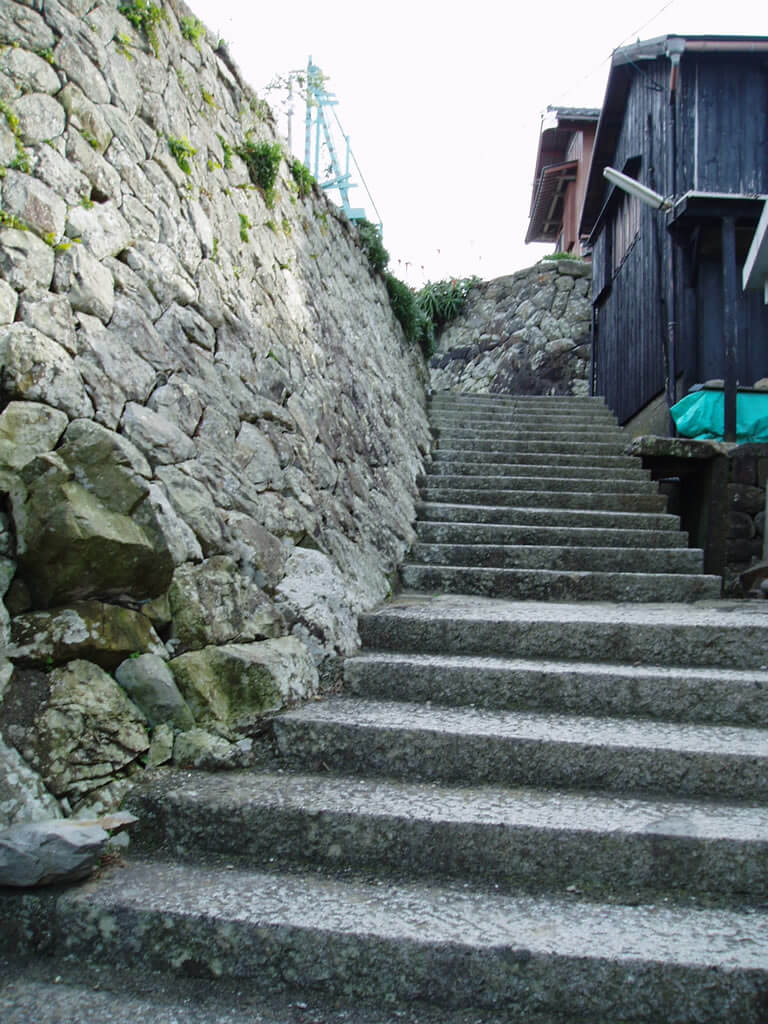
As this rumor spread to nearby villages, several bad guys came to Nakiri Village from the neighboring village to steal this Jizo. In the darkness of the night, I tied it up with a rope and started carrying it, and when I got to the slope on the outskirts of the village, I put it down on the ground to take a break, took a breather, and then when I tried to carry it, for some reason, when I pushed it, it didn't poke me. It doesn't move either.
Meanwhile, the night began to lighten.
The bad guys ran away, leaving the Jizo alone. After that, no one came to steal it, and the villagers began to enshrine it even more carefully than before.
Nowadays, the festival is held every year on February 2th to pray for safety at sea, a good catch, family safety, prosperity in the family business, and traffic safety.